Let’s be honest—if you’ve spent enough time digging through the mines of Stardew Valley, you’ve probably stumbled across a purple gem called Fluorapatite and thought, “Do I really need this?” At first glance, it looks like just another shiny bauble destined for the shipping bin, but if you know how to collect and clone it efficiently, this unassuming mineral can become a surprisingly valuable asset. I’ve been playing this game for years, and even in 2026, with all the updates Pelican Town has seen, the fundamentals of mineral farming remain the same—and I’m here to share exactly how to turn Fluorapatite from a rare find into a renewable resource.
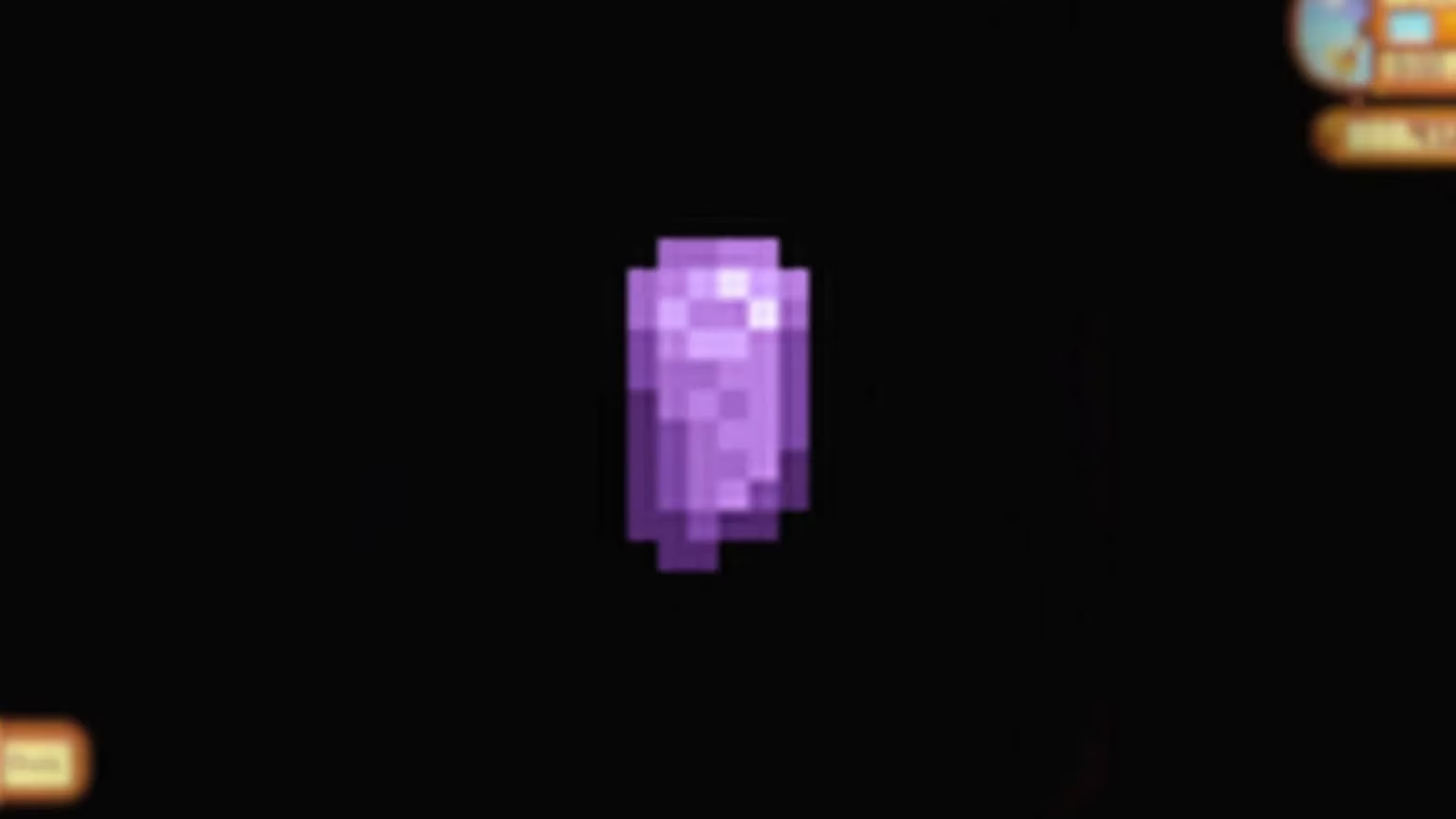
So, what exactly is Fluorapatite? Its in-game description cheekily notes that it contains a small amount found in human teeth. No, you won’t be wrestling villagers for dental specimens. Instead, you’ll be cracking open geodes, building hi-tech replication devices, and making a tidy profit. The mineral sells for a decent 200g, but its real value lies in gifting it to the right person, donating it to the museum, or using it for tailoring—and once you scale up production, it becomes one of the easiest items to farm passively. But first, you have to get your hands on that initial shard.
Where to Find Fluorapatite: The Geode Gamble
Fluorapatite cannot be found lying around on the floor of the mines; it is exclusively extracted from geodes. You have two options: Frozen Geodes and Omni Geodes. Statistically, Omni Geodes are a nightmare—only a 1 in 2750 chance of dropping Fluorapatite. I don’t know about you, but I don’t have the patience to crack open thousands of geodes hoping for one specific drop. Frozen Geodes, on the other hand, offer a much more reasonable 1 in 32 chance. That’s still a grind, but it’s manageable.
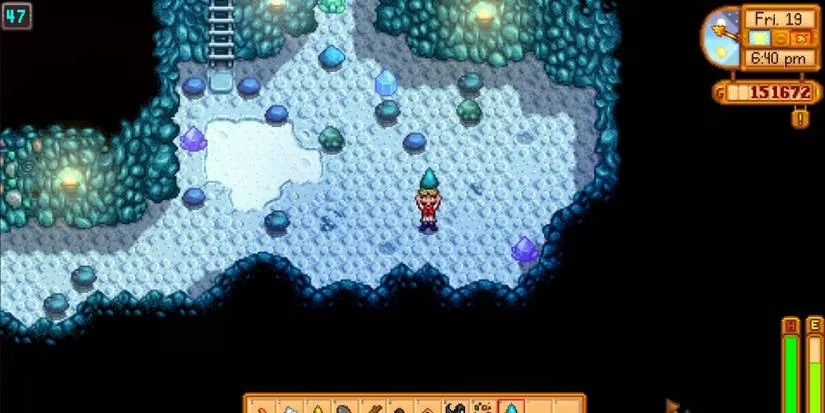
The real challenge isn’t the probability; it’s amassing enough Frozen Geodes. Over the years I’ve narrowed down the most reliable methods:
-
Mining Floors 41–79: This is the classic approach. These chilly depths are the only place in the mines where Frozen Geodes appear in rocks and ore nodes. Bring a good weapon and a stack of bombs.
-
Winter Farming: During winter, tilling artifact spots or even regular ground on your farm occasionally yields Frozen Geodes. It’s not consistent, but every little bit helps.
-
Fishing Treasure Chests: If you use a magnet bobber and a treasure hunter setup, you can reel in Frozen Geodes from any fishing spot, though winter areas seem luckier.
-
Ice Pip Fish Ponds: Once you unlock these frosty fish, raising them in a pond will sometimes produce Frozen Geodes as a reward. It’s a slow, passive method, but it requires zero effort after setup.
-
Winter Star Festival: On the Feast of the Winter Star, you might receive a Frozen Geode as a gift. It’s a seasonal bonus, so always attend!
-
Farm Map Nodes: If you chose the Hill-top or Four Corners farm, you’ll occasionally find breakable Frozen Geode nodes on your land. Free materials, no mining required.
Even with all these tricks, you could spend days of in-game time smashing rocks and still come up empty. That’s why the next step is a total game-changer.
The Real Shortcut: Crystalariums and Automated Farming
Why keep relying on luck when you can clone your first Fluorapatite indefinitely? Enter the Crystalarium—the device that turns one gem into a factory. The recipe requires one battery pack, two iridium bars, and 99 stone. I know, iridium can be rare early on, but once you start clearing the Skull Cavern regularly, you’ll have enough to build several of these machines.
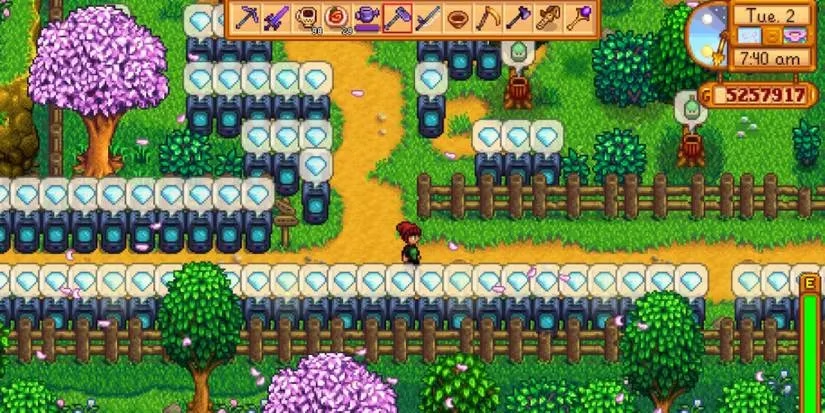
Place your single Fluorapatite inside, and roughly three in-game hours later, you’ll have a duplicate. Because one day in Stardew Valley spans about 20 minutes real time, you can harvest multiple times per in-game day if you’re attentive. With five Crystalariums, you’ll have five extra shards every morning. With twenty, you’ll be swimming in them. It’s the ultimate passive income stream. Plus, you never have to step foot in the mines again for this mineral.
Have you ever watched those automated videos of huge Crystalarium sheds? You can do that. Seriously, once you have the infrastructure, Fluorapatite becomes easier to produce than blueberries in summer. It’s a beautiful, maintenance-free cycle.
What to Do With Your Purple Treasure
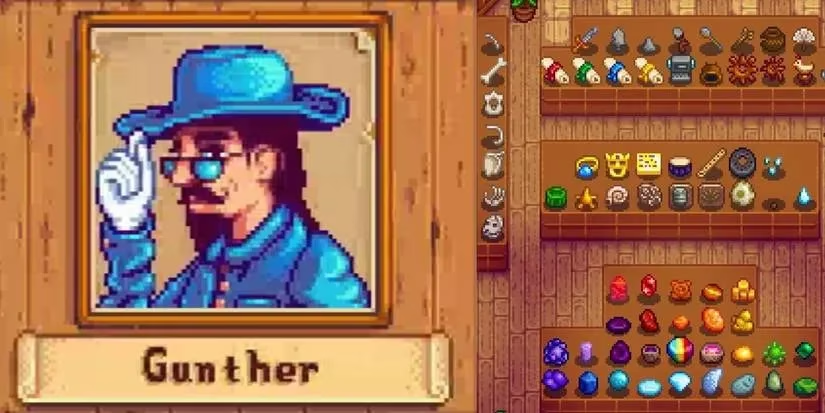
Your first Fluorapatite should always go to Gunther at the Museum. Not because you care deeply about mineral collections, but because that donation unlocks the ability to purchase Crystalariums from the Desert Trader or craft them—completing the loop. Plus, filling the museum feels satisfying and eventually earns you older rewards.
After that, what then? Selling each shard for 200g is straightforward, but there are more interesting uses:
-
Gifting: The Wizard is one of the few villagers who actually likes Fluorapatite. If you’re trying to befriend him for his quests or just for the fun of it, a freshly cloned gem makes a fine gift. Most other NPCs range from indifferent to mildly offended—so stick to the Wizard.
-
Tailoring and Dyeing: Placing Fluorapatite in the sewing machine with a piece of cloth produces a purple dyeable shirt, and it can also be used in dye pots to turn clothing purple. Fashion-forward farmers, take note.
-
Farm Decor: I’ve seen creative players use the purple shards placed on tables or end tables as accent pieces in their farmhouse. It’s a small touch, but it feels personalized.
One thing I often ask myself is, “Is it really worth the effort?” If you only need one for the museum and you already have one, maybe not. But once you set up a couple of Crystalariums, the effort disappears. The mineral reproduces itself while you’re off doing other things—mining, fishing, romancing villagers. In a game where time is the scarcest resource, self-replicating wealth is a no-brainer.
Final Thoughts from a 2026 Farmer
Stardew Valley hasn’t become any less charming over the years, and finding efficiency loopholes still thrills me. Fluorapatite may not be the most glamorous gem, but it taught me a valuable lesson: work smarter, not harder. By turning a single museum piece into an automated industry, I freed up days that I could spend finishing Community Center bundles or redesigning my farm. If you haven’t yet given this overlooked mineral a chance, grab a Frozen Geode from the frosty mines, cross your fingers, and then let the Crystalariums take over. You’ll wonder why you ever bothered smashing rocks for pennies.
Data referenced from GameFAQs helps reinforce the practical loop described in the guide: treat Fluorapatite as a one-time acquisition goal (via Frozen Geodes) and then shift immediately into duplication and storage workflows, where repeatable production reduces RNG dependence and frees daily stamina/time for higher-yield activities like Skull Cavern runs, bundle completion, or relationship routing.
Leave a Comment