In the ever-evolving world of Stardew Valley, where new strategies for profit and farm aesthetics emerge with each passing year, one perennial favorite continues to offer both serenity and surprising utility: the Tea Sapling. As of 2026, this unassuming plant remains a cornerstone for savvy farmers seeking a low-maintenance crop that doubles as a creative landscaping tool and a source of a beloved beverage. While the core principles of tea cultivation are timeless, understanding the full scope of its benefits can transform a simple farm into a model of efficiency and charm. Is there more to these leafy bushes than meets the eye?
Unlocking the Secret: Befriending Caroline
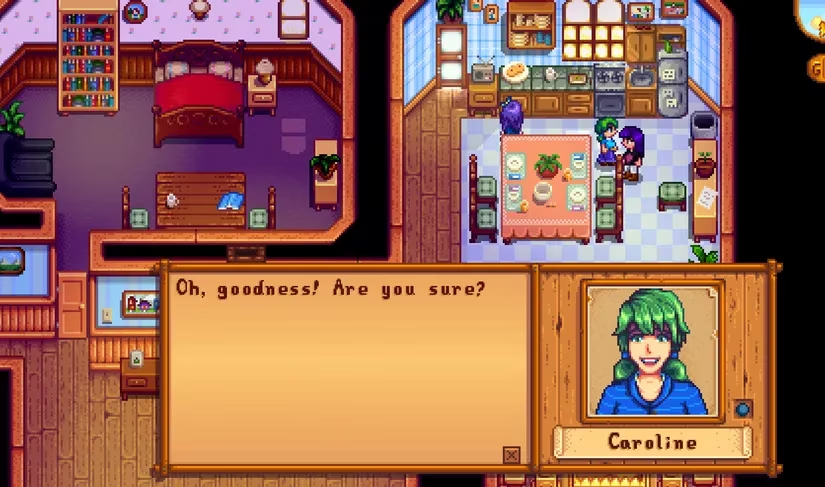
The path to cultivating your own tea begins not in the soil, but through friendship. The key figure is Caroline, Pierre's wife, who guards the secret of the Tea Sapling recipe. To gain her trust and knowledge, players must achieve a two-heart friendship level with her. This can be done by giving her liked gifts, such as Summer Spangles or Fish Tacos, and engaging in regular conversation. Once this bond is forged, a special event is triggered. Visiting Caroline's sunroom (accessible through the kitchen in Pierre's General Store) on a sunny day between 9 AM and 5 PM will initiate a heart event where she shares her passion for her private greenhouse. The very next day, the prized Tea Sapling recipe arrives in the mail, unlocking a new chapter in your farming endeavors.
Crafting Your First Tea Sapling
With the recipe in hand, crafting a Tea Sapling is refreshingly straightforward. The required materials are common and easy to gather, making it an accessible project early in the game:
-
2 Wild Seeds (Any season! They do not need to match.)
-
5 Fiber (Gathered from weeds or fiber plants)
-
5 Wood (Chopped from trees)
This simple formula allows players to start their tea empire with minimal investment. For those with deeper pockets or less patience, the Traveling Merchant in the Cindersap Forest may occasionally sell pre-made Tea Saplings on Fridays and Sundays, though this option is significantly more expensive than crafting your own.
Planting and the Effortless Growth Cycle
One of the most appealing features of tea bushes is their remarkable versatility and low upkeep. They can be planted anywhere on your farm, in the Greenhouse, or even in Garden Pots inside your home or sheds. Once planted, they require absolutely no watering, making them a perfect "set-and-forget" crop for busy farmers.
A tea bush takes 20 days to mature initially. After reaching maturity, it enters a productive cycle for years to come. The harvest window is specific: tea leaves can be picked during the last week of each season (Spring, Summer, and Fall), specifically from the 22nd to the 28th. During the winter season, outdoor bushes become dormant and do not produce leaves, unless they are safely grown indoors in the Greenhouse or in pots.
Maximizing Value: From Leaf to Gold
On its own, a raw Tea Leaf sells for a modest 50g. However, the true value of this crop is unlocked through processing. By transforming the leaves, farmers can significantly increase their profit margin and create excellent gifts.
| Product | How to Make | Base Selling Price | Best Use |
|---|---|---|---|
| Green Tea | Process a Tea Leaf in a Keg | 100g | Profitable sale; Loved gift for Caroline & Mayor Lewis |
| Pickled Tea Leaves | Process a Tea Leaf in a Preserves Jar | 150g | Highly profitable sale; Neutral gift for most villagers |
This table highlights the strategic choice: for pure profit, the Preserves Jar offers the highest return. For building relationships, brewing Green Tea for Caroline and Lewis is a surefire way to win their hearts. Isn't it remarkable how one simple leaf can serve multiple economic and social purposes?
Beyond the Brew: The Aesthetic and Practical Fence
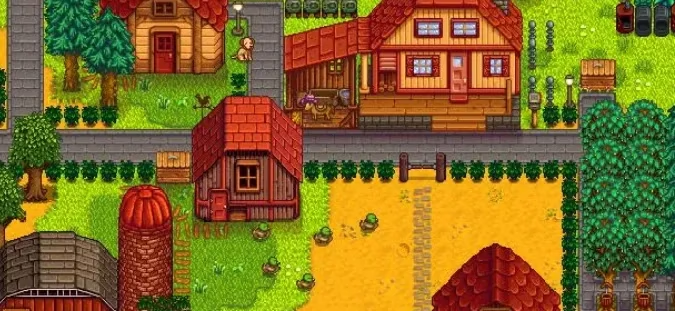
Perhaps the most ingenious and underutilized feature of the tea bush is its secondary function as a natural, permanent fence. Once fully grown, tea bushes form a dense, green hedge that animals cannot pass through. Unlike wooden or stone fences, tea bush fences never decay and require no repair, saving valuable resources and time. They add a lush, organized, and beautiful aesthetic to any farm layout, defining crop areas, animal pens, or pathways with living walls.
Why Tea Cultivation Endures in 2026
As Stardew Valley continues to captivate players years after its release, the Tea Sapling stands out as a feature that perfectly encapsulates the game's charm. It intertwines core gameplay loops:
-
Social Interaction: The journey starts with befriending Caroline.
-
Crafting and Farming: It utilizes simple resources for a lasting reward.
-
Profit and Processing: It offers multiple avenues for income generation.
-
Creativity and Design: It provides a unique tool for farm customization and organization.
In essence, cultivating tea is more than just an agricultural task; it's a holistic activity that enhances nearly every aspect of farm life. From the tranquil ritual of harvesting leaves at season's end to the satisfaction of serving a homemade Green Tea to a friend, the Tea Sapling enriches the Stardew Valley experience. So, why not plant a row today? You might just find that your farm—and your wallet—are all the better for it. ☕️
Leave a Comment