In 2026, The Legend of Zelda: Tears of the Kingdom still rewards players who return to Hyrule with a toolbox of Zonai devices, but those contraptions are only as useful as the battery that powers them. A community-made infographic attributed to dr_henry_jones has turned the game's multi-step battery upgrade process into a single, readable map, and it remains a practical reference for players who want longer flights, steadier vehicles, and fewer midair sputters. The guide's appeal is simple: it compresses a chain of underground farming, forge trading, and refinery exchanges into a sequence that can be followed without a spreadsheet.
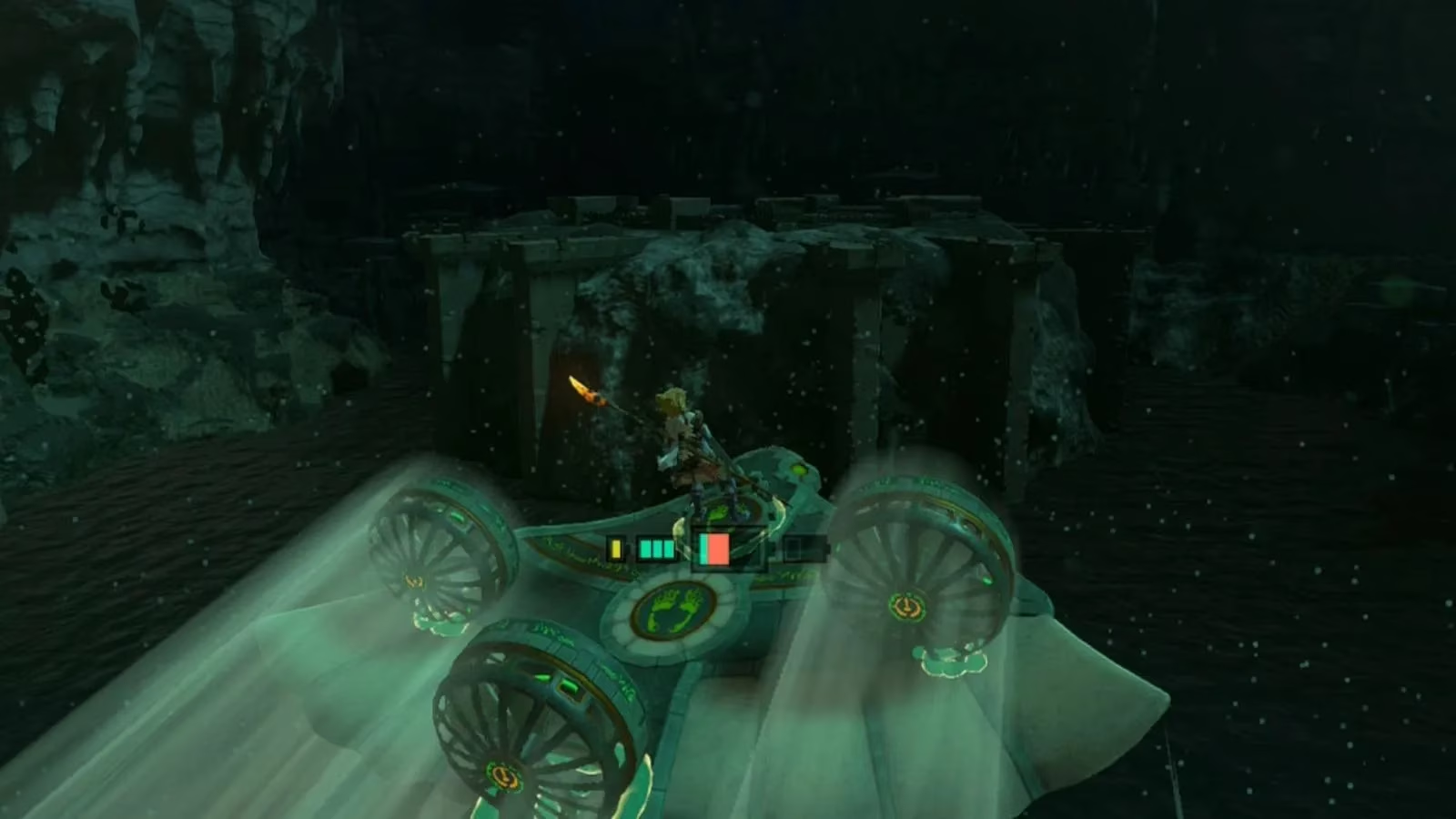
The battery economy in Tears of the Kingdom is a subterranean hydrological cycle: Zonaite is the rainfall, Crystallized Charges are the reservoir, and Energy Wells are the turbines that turn stored effort into usable power. At the start, Link has only a single full battery, according to the reference material. More capacity arrives through Energy Wells, and the route to those wells runs through the Depths. Players farm Zonaite underground, trade it at Forge Constructions for Crystallized Charges, and then exchange those charges at Crystal Refineries. The conversions are where many players stumble, because the game does not present the whole chain as one tidy tutorial.
A Chain of Conversions
The infographic works like a locksmith's map for a lock whose tumblers are buried in the earth—each conversion must be lifted in the correct order. The core arithmetic is straightforward once it is laid out:
| Stage | Action | Conversion |
|---|---|---|
| ⛏️ Farm | Collect Zonaite in the Depths | 3 Zonaite becomes 1 Crystallized Charge |
| 🧱 Large deposit | Trade Large Zonaite | 3 Large Zonaite becomes 1 Large Crystallized Charge, worth 20 Crystallized Charges |
| 🔥 Forge | Visit Forge Constructions | Zonaite is exchanged for Crystallized Charges |
| 🔋 Refine | Visit Crystal Refineries | 100 Crystallized Charges becomes 1 Energy Well |
| ✅ Complete | Build toward a full battery | A full battery requires three Energy Wells, per the guide |
For newcomers, the most important takeaway is that Zonaite is not the final currency. It is raw material. The Depths supply the ore, Forge Constructions convert it into charges, and Crystal Refineries turn those charges into permanent battery capacity. The guide's single-image format matters because Tears of the Kingdom often asks players to hold several systems in their heads at once: vehicle construction, underground navigation, resource collection, and device endurance. Without a clear map, the process can feel like assembling a clock while wearing oven mitts.
The Rare Shortcut
There is also a shortcut that the infographic highlights. Huge Crystallized Charges are worth 100 Crystallized Charges, which means one of them can be turned into an Energy Well immediately. These items are rare, however. According to the reference material, they can only be obtained by completing missions in Tears of the Kingdom's abandoned underground mines or by rematching the regional bosses in the Depths. The guide advises players to collect these treasures before farming Crystallized Charges through ordinary means and pushing Link's battery to maximum. Otherwise, the rare rewards become obsolete once capacity is full.
That warning gives the guide a strategic edge. It is not merely a conversion table; it is a timing document. Players who treat the Depths as a one-time mining trip may miss the chance to use the largest charges efficiently. Players who follow the sequence can fold the rare rewards into their upgrade plan and avoid wasting high-value items on a battery that no longer needs them.
Why the Guide Still Matters
The Legend of Zelda: Tears of the Kingdom is available for Nintendo Switch, and in 2026 its sandbox still attracts builders who test the limits of Zonai machinery. Battery capacity remains central to that experimentation. Longer battery life means more ambitious aircraft, more reliable ground vehicles, and more freedom to explore without constant recharging. The community infographic does not replace experimentation, but it removes much of the confusion around the upgrade path. It functions as a Rosetta stone for a dialect spoken only in the Depths, translating ore into charges and charges into usable power.
For players revisiting Hyrule or starting fresh, the guide's value lies in its clarity. It shows that the battery upgrade system is not a maze but a pipeline: Zonaite flows in, Crystallized Charges accumulate, and Energy Wells expand Link's capacity. The steps are detailed, the conversions are explicit, and the rare shortcut is flagged before it becomes useless. In a game built around creative contraptions, that kind of map is as useful as a well-tuned propeller—it keeps the whole machine moving.
Leave a Comment