I never knew a single mineral could make my heart flutter with such determination until Gunther pinned that empty artifact slot on his museum board. It was 2026, and the final piece of my Collection shimmered in my mind like a phantom—the Opal. It wasn't the flashiest gem, but its soft dance of rainbow fire had become an obsession, a whisper in every frozen geode I cracked open.
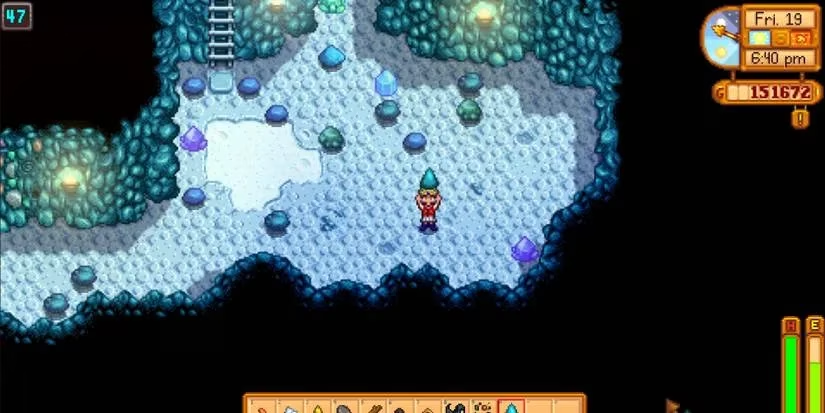
If you’ve ever tried to pick out a single note in a symphony by only listening through a tin can, you’ll understand how Opal hunting felt in those early days. The Mines were a cacophony of possibilities—geodes that hid iron, copper, and the maddening glint of quartz when I craved that milky luminescence. I’d descend past floor 41 with my pickaxe heavy in my hand, my breath puffing in the chill air of the ice levels. The Frozen Geodes glistened on the walls like caged winter light, and each one I chiseled free felt like capturing a snowflake just to see if it held a rainbow inside.
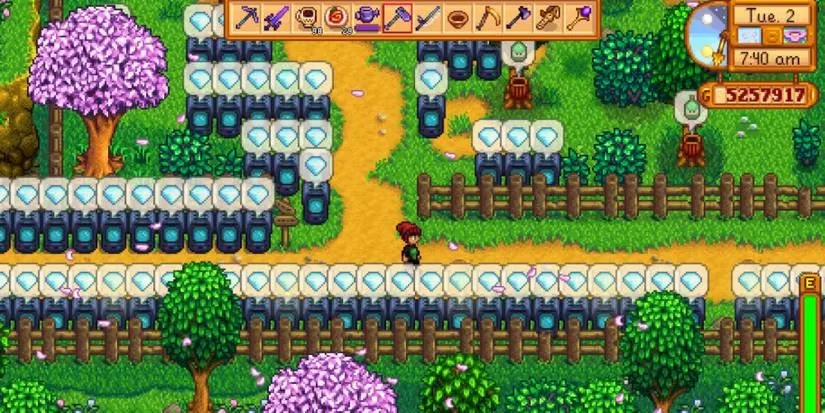
I became a regular at Clint’s workshop, my pockets bulging with these icy capsules. Watching him crack them open was a ritual of cresting hope and plummeting disappointment—over and over, until my coin purse groaned. Then I remembered an old farmer’s trick I’d read on a dusty forum: the Crystalarium. The device was a perfect mirror of nature’s patience, a self-replicating garden for minerals. I placed my first hard-won Opal inside, and it began to multiply like a silent, geometric heartbeat. Every three hours and eleven minutes, a new gem emerged—a timetable so precise it felt like the farm’s own pulse, and soon my stockpile of reflective stones grew faster than my chickens could produce eggs.
But the real paradigm shift came when I dug a fishing pond dedicated to Ice Pips. Those spiky little fish turned my water into a frozen geode farm; it was like planting a grove of trees that grew stone fruit in winter. I’d wake up each misty morning to the pond’s rippling surface, and there, nestled among the seaweed, would be the telltale rounded shape of a Frozen Geode. Farming Opal became less of a mineshaft pilgrimage and more of a serene domestic ritual. I’d sip my coffee, gather the geodes, and trundle them over to Clint with the surety of a baker retrieving loaves from an oven.
Omni Geodes offered another thread in this tapestry of luck. I panned the rivers with a prospector’s optimism, my forehead scrunched with concentration as Carbon Ghosts evaporated under my blade in the Skull Cavern. Krobus, bless his shadowy heart, sold Omni Geodes in the sewers, and the Oasis trader became a weekend destination, where I’d exchange sandy coins for shimmering possibilities.
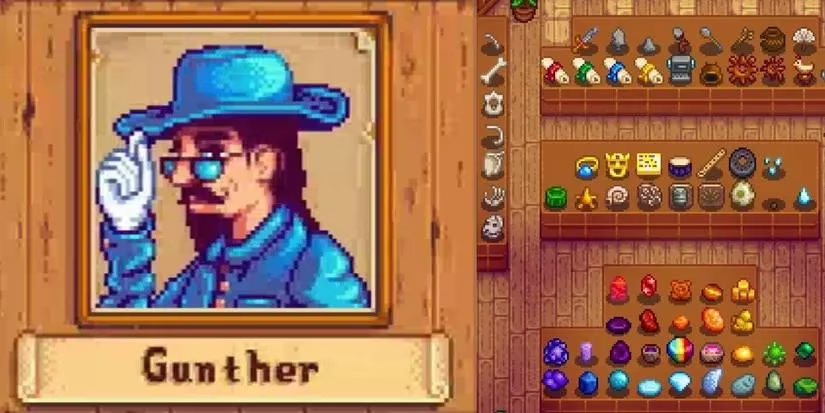
In the end, the Opal taught me patience. It has no recipe, no bundle craving its sparkle—just the quiet purpose of completing Gunther’s artifact inventory. When I finally placed it on the shelf, the milky stone caught the lamplight and threw tiny fireflies of color onto the hardwood, and I felt the satisfaction of a cartographer filling in the last blank space of an ancient map. These days, extra Opals pile up for a gentle profit—150g per stone—or glide into the hands of the Wizard as a gift. He’s the only one who seems to understand the layered beauty within that chalky orb, nodding with a soft smile that says, “You’ve seen it now, haven’t you? The silent rainbow.” And I have.
Leave a Comment