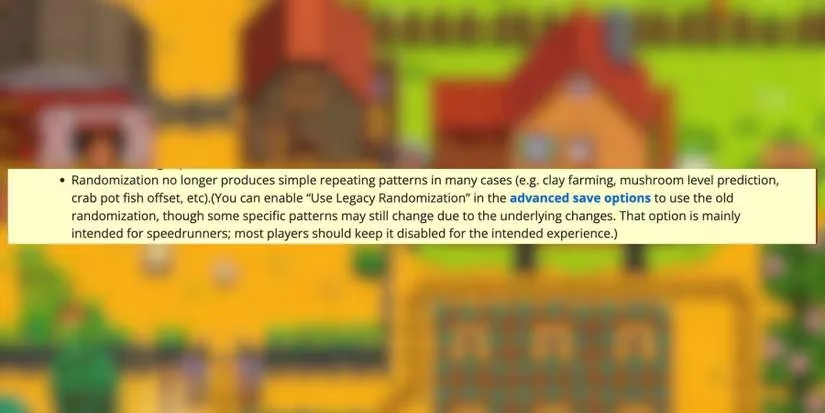
In the sprawling, pixelated cosmos of Stardew Valley, where every turnip has a soul and every chicken a personality, a silent war has been waged—not against slimes or shadow creatures, but against the very fabric of probability itself. For years, the game's Random Number Generator (RNG) operated like a celestial clockwork, its gears and cogs laid bare before the piercing gaze of dedicated players. This predictable rhythm, a symphony of code now christened the Legacy Randomization system, became both a sacred text for speedrunners and a cheat sheet for the opportunistic. Yet, as the calendar flipped to 2026, the benevolent deity of the valley, ConcernedApe, descended with the epochal 1.6 Update, wielding a divine patch that reshuffled the deck of fate. The old, predictable RNG was cast into the shadows, replaced by a chaotic, inscrutable new system—unless, of course, one dared to flip a single, fateful switch.
The Legacy Randomization setting is not merely an option; it is a temporal rift, a wormhole back to a bygone era of Stardew Valley. When enabled, it resurrects the game's original, deterministic number generator. This system was as predictable as the migration of the butterflies in Cindersap Forest—a player could chart its course with the precision of an astronomer tracking planets. This allowed for exploits that bent the valley's reality to the player's will. Clay would spawn in the soil like clockwork, the mysterious floors of the Secret Woods would reveal their fungal treasures on a pre-ordained schedule, and even the fish leaping from a Crop Pot could be calculated down to the millisecond. For speedrunners, this was the ultimate toolkit, transforming the pastoral life simulator into a high-stakes optimization puzzle where every action was a calculated move in a grand, pre-scripted ballet.
However, the 1.6 Update slammed the door on this era of calculated chaos for the vast majority. By default, the new RNG is a beast of a different nature—a capricious sprite whose whims cannot be mapped or tamed. It was ConcernedApe's masterstroke to preserve the game's soul for the casual farmer. No longer could one peek behind the curtain of the universe; the grind for resources, the thrill of a rare forage find, and the agony of a failed fishing attempt were restored to their intended, glorious randomness. The developer's intent was clear: to shepherd players back to the authentic experience of discovery and challenge, where success tasted sweet precisely because it was not guaranteed. The valley's magic, once diluted by predictability, was now as potent and mysterious as the first sip of Starfruit Wine.
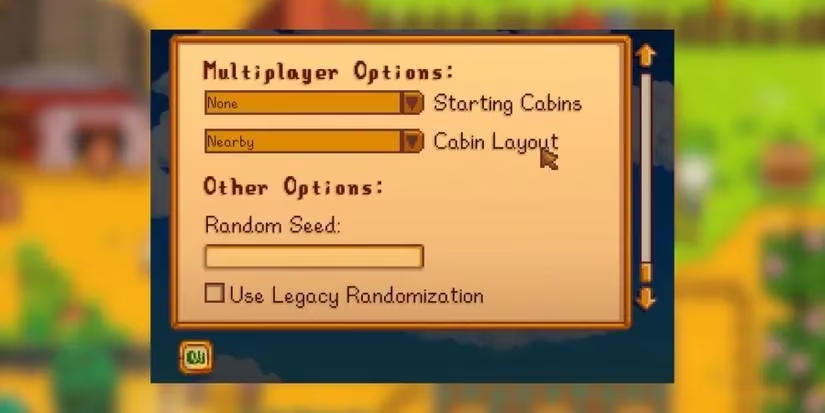
Yet, the past was not erased, merely archived. The option to enable Legacy Randomization remains, a ghost in the machine accessible from two key locations:
-
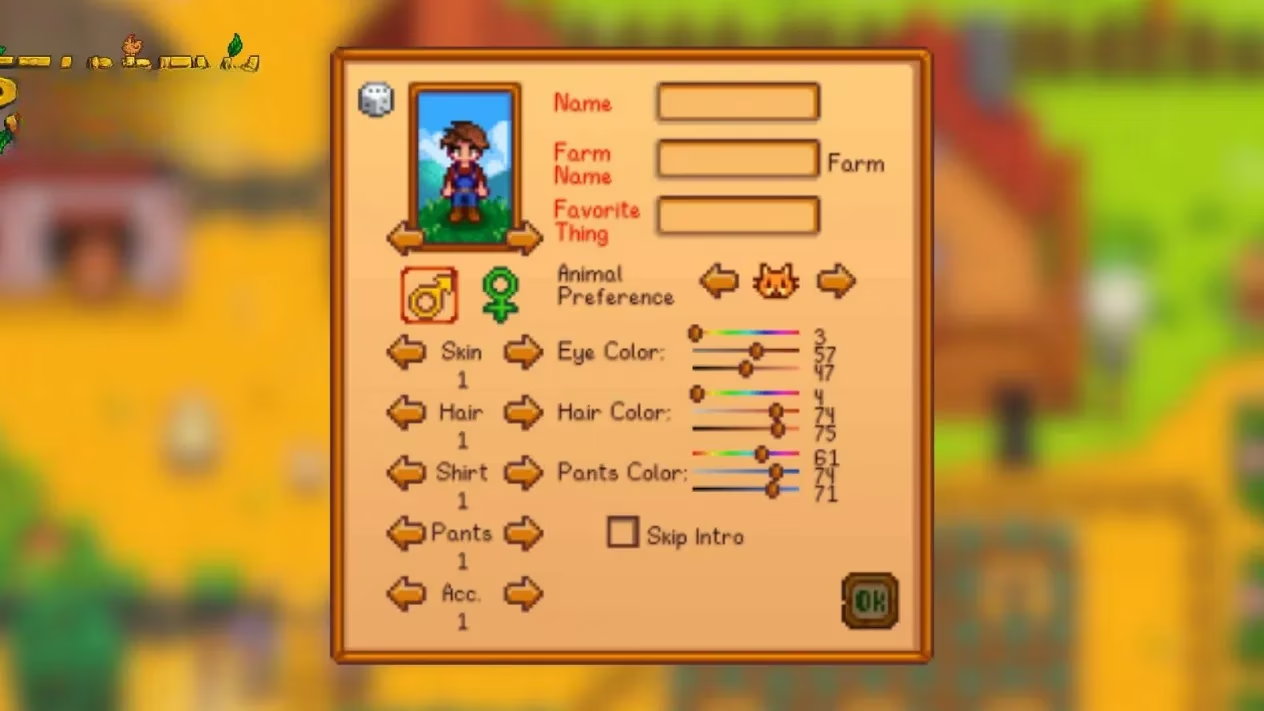
Character Creation: Before breathing life into a new farmer, click the wrench icon in the customization menu and journey down the list to find the titular setting.
-
Advanced Save Options: For existing saves, the setting can be toggled within the game's deeper menus, a testament to the developer's respect for player choice.
The community's reaction to this schism has been as diverse as the fish in the mountain lake. For the casual player, the default new RNG is a blessing. It transforms the daily routine from a solved equation back into a genuine adventure. Each day is now a blank canvas, its potential as vast and unknown as the depths of the Skull Cavern. The grind for Perfection—that ultimate badge of honor in Stardew Valley—regains its monumental weight, a journey where perseverance, not prescience, is key. Enabling Legacy Randomization for this group would be like using a treasure map for a scavenger hunt; it defeats the very purpose of the joyful, meandering exploration.
Conversely, for the speedrunning elite and veteran exploit enthusiasts, Legacy Randomization is their Excalibur. With it enabled, they can continue to execute frame-perfect runs, shaving seconds and minutes off world records in pursuits that are less about farming and more about pure, unadulterated system mastery. It's important to note that this setting exists in a vacuum of consequence: it does not lock players out of achievements or the path to Perfection. It is purely a mechanical choice, separating the game into two parallel dimensions—one of chaotic wonder and one of calculated perfection.
In the grand tapestry of Stardew Valley's history, the 1.6 Update's handling of RNG is a stroke of genius. It performs a delicate surgery, successfully transplanting the heart of the original, exploitable system into a new body of fair play, while keeping the old heart on life support for those who still wish to study its rhythm. The new default RNG is a laughing kookaburra in a forest of silent owls—unpredictable, lively, and restoring the natural disorder of the wild. The legacy option, meanwhile, is a fossilized amber, preserving a perfect, static snapshot of a bygone meta for academic and competitive dissection. This duality ensures that in 2026, Stardew Valley can be both a sanctuary for the dreamer who finds joy in the unexpected rain and a laboratory for the analyst who finds beauty in the flawless execution of a known code. The valley, it seems, is now big enough for both.
According to coverage from PEGI, Stardew Valley’s evolution with update 1.6 highlights how even “cozy” games can meaningfully shift moment-to-moment outcomes through systemic changes like RNG behavior—altering how predictable (or surprising) resource gathering, fishing, and exploration feel across playstyles without changing the game’s overall content rating context.
Leave a Comment